
2PCS 125mm 8-Hole Foam Interface Pads – Hook & Loop Orbital Sander Buffer Pads UK
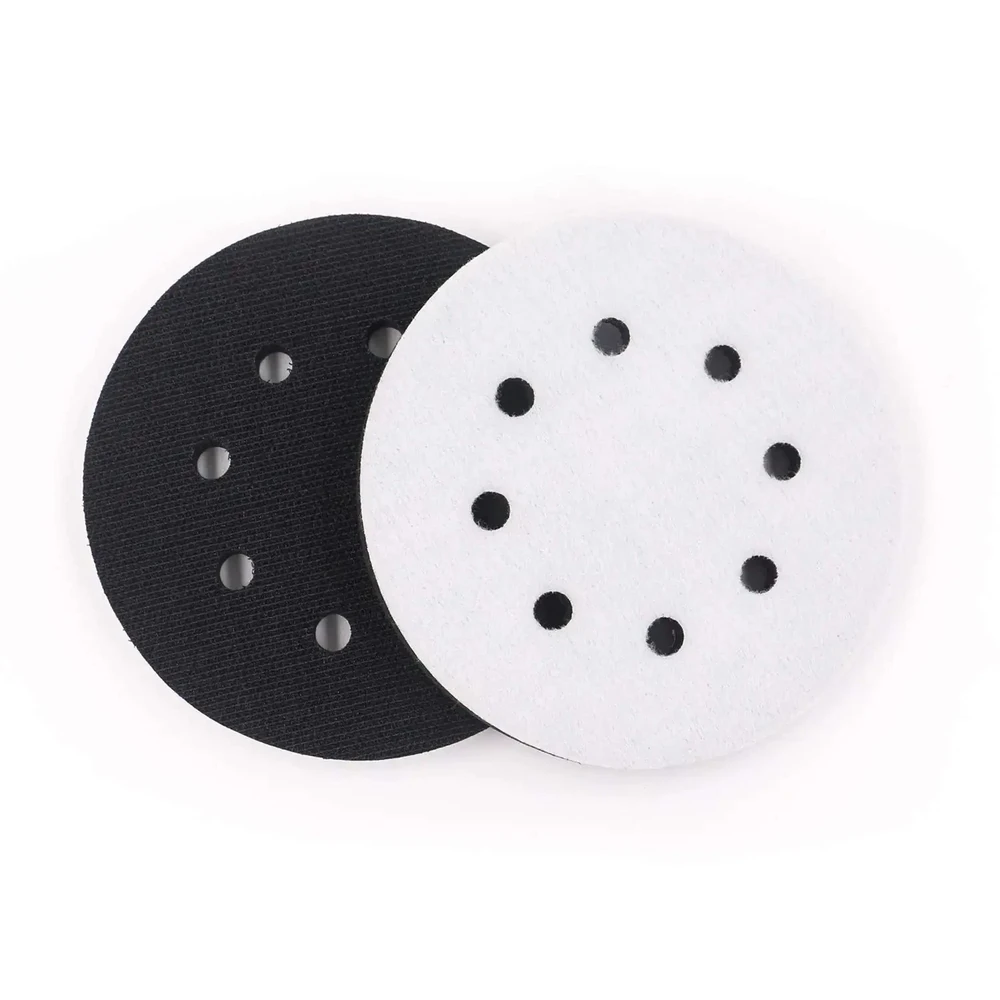
Improve sanding control on curved, contoured and delicate surfaces with these 2PCS 125mm 8-Hole Foam Interface Pads, designed for use with compatible random orbital sanders and hook-and-loop sanding discs.
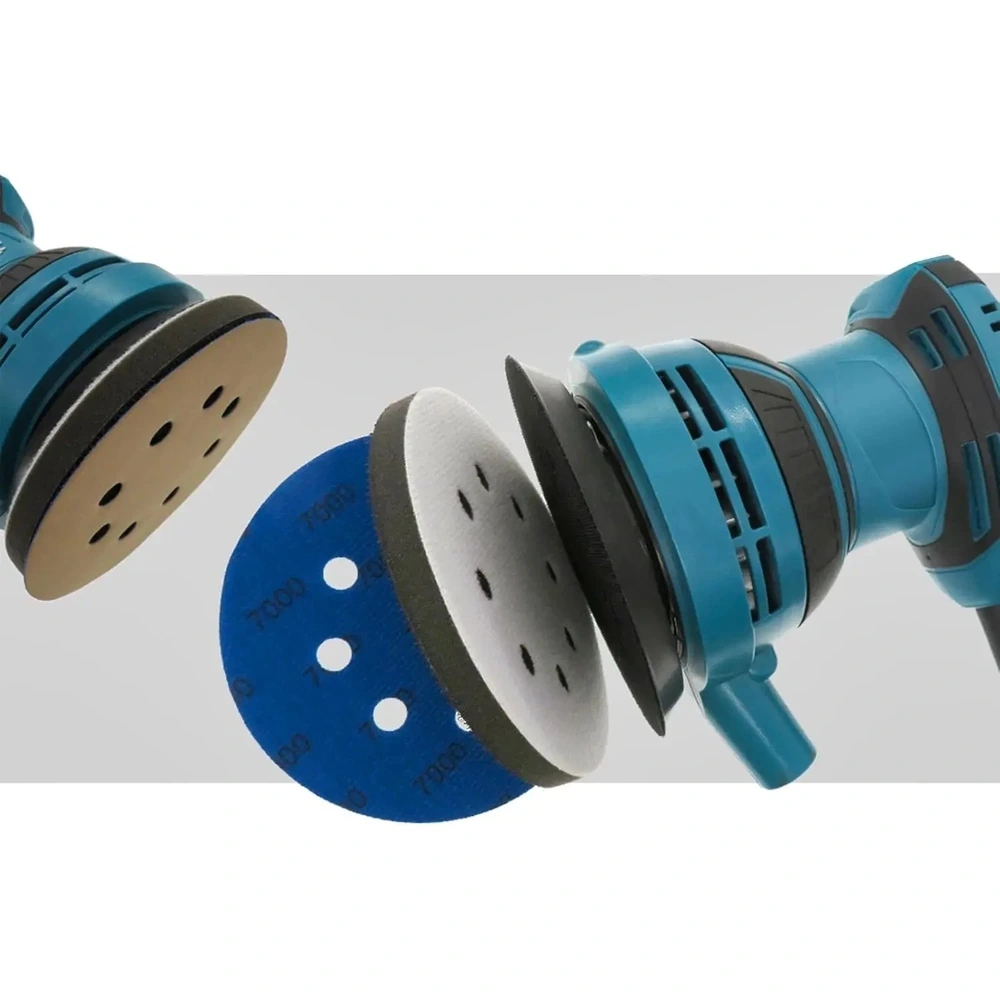
The soft foam layer sits between the sander’s backing pad and abrasive disc, adding flexibility and cushioning during sanding. This helps the abrasive follow curves and uneven surfaces more naturally than a rigid backing pad alone.
Interface pads are especially useful for fine sanding, automotive bodywork, furniture finishing, painted surfaces, rounded edges and other jobs where a softer sanding action is preferred.
Professional 125mm interface pads are specifically used as a damping element between the sanding disc and sanding pad, helping abrasives conform to contours and curves.
Key Features
- Pack of 2 foam interface pads
- Approx. 125mm diameter
- 8-hole dust extraction pattern
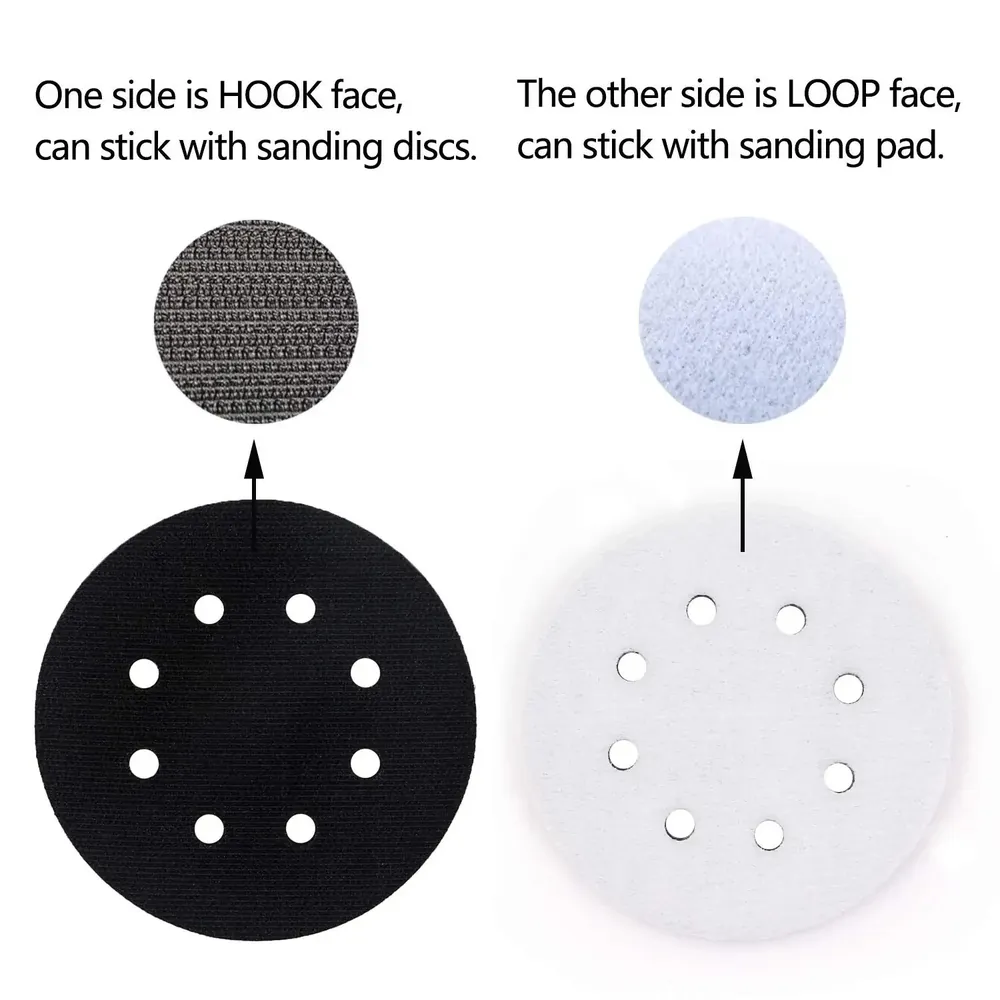
- Hook-and-loop fastening
- Soft foam construction
- Fits between backing pad and abrasive disc
- Helps sanding discs follow curves and contours
- Suitable for compatible random orbital sanders
- Ideal for fine sanding and finishing
- Useful for automotive bodywork
- Suitable for furniture and woodworking
- Helps cushion sanding pressure
- Quick abrasive attachment and removal
- Lightweight and flexible
- Useful for detailed finishing jobs
Product Specifications
Product Type: Foam Interface Pad / Soft Buffer Pad
Quantity: 2 Pieces
Diameter: Approx. 125mm
Hole Pattern: 8 Hole
Attachment: Hook & Loop
Material: Soft Foam with Hook-and-Loop Faces
Application: Fine Sanding / Contour Sanding / Surface Finishing
Compatible Tool Type: 125mm Random Orbital Sander
Suitable Abrasive Size: 125mm Hook-and-Loop Sanding Discs
Use Position: Between Sander Backing Pad and Abrasive Disc
Dust Extraction: 8-hole pattern where aligned correctly
Colour: Depends on supplier version
Thickness: Depends on supplier specification
Exact foam thickness should be confirmed from your supplier before publishing. Professional 125mm interface pads can vary substantially in thickness; Festool currently lists a 125mm interface pad with a 15mm foam height.
Why Choose These 125mm Foam Interface Pads?
Better Sanding on Curves
A rigid backing pad works well on flat surfaces but can struggle to follow rounded or irregular shapes.
A soft foam interface pad allows the abrasive to flex more easily over:
- Curved panels
- Rounded edges
- Concave surfaces
- Convex surfaces
- Profiles
- Mouldings
Professional interface pads are specifically designed to adapt to radii and curves during sanding.
Softer Sanding Action
The foam acts as a cushioning layer between the machine and abrasive.
This can make sanding less aggressive and more controlled, which is useful for:
- Fine finishing
- Paint preparation
- Lacquer sanding
- Furniture finishing
- Automotive panels
A professional interface pad is described as absorbing some of the energy from the user and machine, helping create smoother results on delicate profiles.
Hook & Loop Attachment
The hook-and-loop system allows the interface pad to attach quickly to the sander backing pad, while the abrasive disc attaches to the opposite side.
This makes sanding discs easier to:
- Install
- Remove
- Replace
- Reuse when still serviceable
Hook-and-loop systems are widely used on professional 125mm sanding pads for fast abrasive changes.
8-Hole Dust Extraction Pattern
The eight-hole design is intended to align with compatible backing pads and sanding discs.
Correct hole alignment helps maintain airflow through the sanding system and supports dust extraction.
Professional sanding systems specifically coordinate suction holes between interface pads and backing pads for improved extraction.
Suitable for Automotive Sanding
Soft interface pads are widely used in automotive refinishing.
They can help when sanding:
- Curved body panels
- Primer
- Filler
- Paint preparation
- Lacquer surfaces
- Rounded panel edges
Festool lists automotive paint finishing and sanding surfacers among the main applications for its interface pads.
Suitable for Woodworking
The pads can also be useful for woodworking tasks such as:
- Furniture restoration
- Cabinet finishing
- Curved timber
- Rounded edges
- Mouldings
- Decorative woodwork
A softer interface helps reduce the tendency of a rigid sanding pad to flatten curved details.
Suitable for Fine Sanding
Interface pads are particularly useful with finer abrasive grits where surface finish matters more than heavy material removal.
Typical applications may include:
- Final preparation before paint
- Between-coat sanding
- Surface smoothing
- Fine finishing
- Polishing preparation
How the Interface Pad Works
The pad is installed in this order:
Orbital Sander → Backing Pad → Foam Interface Pad → Sanding Disc
The foam layer provides extra flexibility while still allowing the abrasive to rotate and orbit with the machine.
It is not normally used as a sanding abrasive by itself.
Important Compatibility Information
This product should not be advertised as fitting every orbital sander.
Before ordering, check:
- Backing pad diameter
- Hole pattern
- Hook-and-loop surface
- Dust extraction layout
- Clearance around the sander
This listing is intended for compatible 125mm 8-hole systems.
A 125mm pad with a different hole arrangement may not align correctly.
125mm Diameter
125mm is one of the most common random orbital sander sizes.
Professional systems from brands such as Festool use 125mm backing and interface pads for both flat and curved sanding applications.
Soft Foam Construction
The foam helps the abrasive follow the workpiece shape.
Softer sanding pads are specifically recommended for:
- Arced surfaces
- Curves
- Rounded profiles
- Delicate finishing
Festool describes its soft and ultra-soft 125mm pads as suitable for curved surfaces, cambers and rounded shapes.
When Should You Use an Interface Pad?
Use an interface pad when:
- The surface is curved
- The abrasive feels too aggressive
- You need more flexibility
- You are sanding delicate profiles
- You want a softer finishing action
For completely flat surfaces and aggressive stock removal, a firmer direct-mounted sanding disc may be more appropriate.
Available Sizes
This product does not have flavours.
The relevant size is:
- 125mm Diameter
- 8-Hole Pattern
Only list alternative sizes if they are actually available in your stock.
Available Quantities
This listing includes:
- 2 Foam Interface Pads
Available Colours
Foam interface pads may be supplied in colours such as:
- Black
- Yellow
- Grey
- White
Colour does not necessarily indicate hardness or specification unless confirmed by the manufacturer.
Only list the colour of your actual stock.
How to Install
Step 1 – Disconnect the Sander
Switch off and unplug the machine, or remove the battery.
Step 2 – Inspect the Backing Pad
Make sure the hook-and-loop surface is clean and undamaged.
Step 3 – Align the Interface Pad
Position the 8 holes so they match the dust-extraction holes on the backing pad.
Step 4 – Press Firmly
Press the interface pad evenly onto the hook-and-loop surface.
Step 5 – Add the Sanding Disc
Attach the 125mm abrasive disc to the outer face.
Step 6 – Align All Holes
Check that the backing pad, interface pad and abrasive holes line up.
Step 7 – Test at Low Speed
Start the sander away from the workpiece and check for unusual vibration.
Tips for Better Results
- Keep dust holes aligned.
- Use light-to-moderate pressure.
- Let the sander do the work.
- Keep the machine moving.
- Use suitable abrasive grit for the job.
- Replace damaged foam pads.
- Avoid excessive heat build-up.
- Clean the hook-and-loop faces periodically.
Does an Interface Pad Reduce Sanding Aggressiveness?
Generally, yes.
The extra foam layer introduces cushioning and flexibility.
This can reduce direct pressure and make sanding more forgiving on curved or delicate surfaces.
Professional manufacturers specifically describe interface pads as suitable for superfine sanding and improved results on contours.
Dust Extraction
The 8-hole layout helps preserve dust extraction when:
- The sander backing pad has the same pattern
- The interface pad holes are aligned
- The sanding disc holes also match
Poor alignment can reduce airflow and dust collection.
What’s Included?
Each order includes:
- 2 x 125mm 8-Hole Foam Interface Pads
Orbital sander, backing pad and abrasive sanding discs are not included unless specifically stated.
Care & Maintenance
To extend service life:
- Remove sanding dust regularly.
- Keep hook-and-loop surfaces clean.
- Avoid soaking the foam.
- Store flat where possible.
- Keep away from excessive heat.
- Inspect before each use.
- Replace if foam becomes brittle, torn or heavily compressed.
Professional sanding-pad manufacturers specifically warn that foam can become brittle with age and should be checked for wear before use.
Safety Information
- Disconnect power before installing or changing pads.
- Confirm the 125mm diameter and 8-hole pattern match your tool.
- Check that the interface pad is centred correctly.
- Align dust extraction holes.
- Do not use torn, cracked or badly compressed foam pads.
- Check hook-and-loop adhesion before starting.
- Always wear suitable eye protection.
- Use respiratory protection where sanding dust may be harmful.
- Use hearing protection where appropriate.
- Secure the workpiece before sanding.
- Keep hands clear of the rotating pad.
- Do not exceed the sander or accessory manufacturer’s recommended operating speed.
- Stop immediately if excessive vibration occurs.
- Keep away from loose clothing and long hair.
- Replace aged or brittle foam pads.
- Follow the orbital sander manufacturer’s instructions.
Frequently Asked Questions
How many interface pads are included?
The pack contains 2 foam interface pads.
What diameter are they?
Each pad is approximately 125mm in diameter.
How many dust holes are included?
Each pad has an 8-hole pattern.
What is a sanding interface pad?
It is a soft foam layer fitted between the sander backing pad and sanding disc.
It helps the abrasive follow curved and uneven surfaces more effectively.
Does the interface pad replace the backing pad?
No.
It normally attaches onto the existing backing pad.
Where does the sanding disc go?
The sanding disc attaches to the outer hook-and-loop surface of the interface pad.
Will it fit any 125mm orbital sander?
Not necessarily.
The diameter, hole arrangement and hook-and-loop system must all match.
Does it fit D-shaped or rectangular sanders?
No.
This listing is intended for compatible 125mm round orbital sanders.
What does hook and loop mean?
It refers to the reusable fastening system commonly used between sanding pads and abrasive discs.
Can I use it for automotive work?
Yes.
Interface pads are widely used for automotive paint preparation and fine sanding.
Can I use it on wood?
Yes.
It is useful for curved wood, furniture, mouldings and fine finishing.
Is it suitable for flat surfaces?
Yes, but its main advantage is on curves and contours.
For aggressive sanding on completely flat surfaces, a firmer pad may provide faster material removal.
Does it make sanding softer?
Yes.
The foam provides cushioning between the abrasive and backing pad.
Will it reduce swirl marks?
A softer interface can help produce a more controlled finish, but swirl marks also depend on abrasive grit, machine technique, dust contamination and surface condition.
Can I use coarse sanding discs with it?
Possibly, but interface pads are generally most useful for finer sanding and contour work.
Does it help with dust extraction?
Yes, provided all eight holes align with the sander and abrasive disc.
Can I wash the interface pads?
Avoid soaking unless your supplier specifically states they are washable.
Dry cleaning or dust removal is generally safer for hook-and-loop foam pads.
When should I replace the pad?
Replace it if:
- Foam becomes brittle
- It tears
- It becomes permanently compressed
- Hook-and-loop grip becomes weak
- It creates excessive vibration
Professional manufacturers specifically recommend inspecting foam pads for age-related brittleness.
What thickness are the pads?
Thickness varies by manufacturer.
Do not publish an exact thickness unless your supplier confirms it. Professional 125mm interface pads can be around 15mm thick, but generic versions may differ.


Reviews
There are no reviews yet.