
4/5 Pin 40A Waterproof Automotive Relay – 12V/24V Car Electrical Relay UK
Control higher-current automotive accessories using a lower-current switching circuit with this 4/5 Pin 40A Automotive Relay, available in compatible 12V and 24V DC versions.
Designed for vehicle electrical installations, the relay can be used to switch suitable accessories such as lighting, cooling fans, pumps and other compatible electrical loads without routing the full accessory current directly through the dashboard switch.
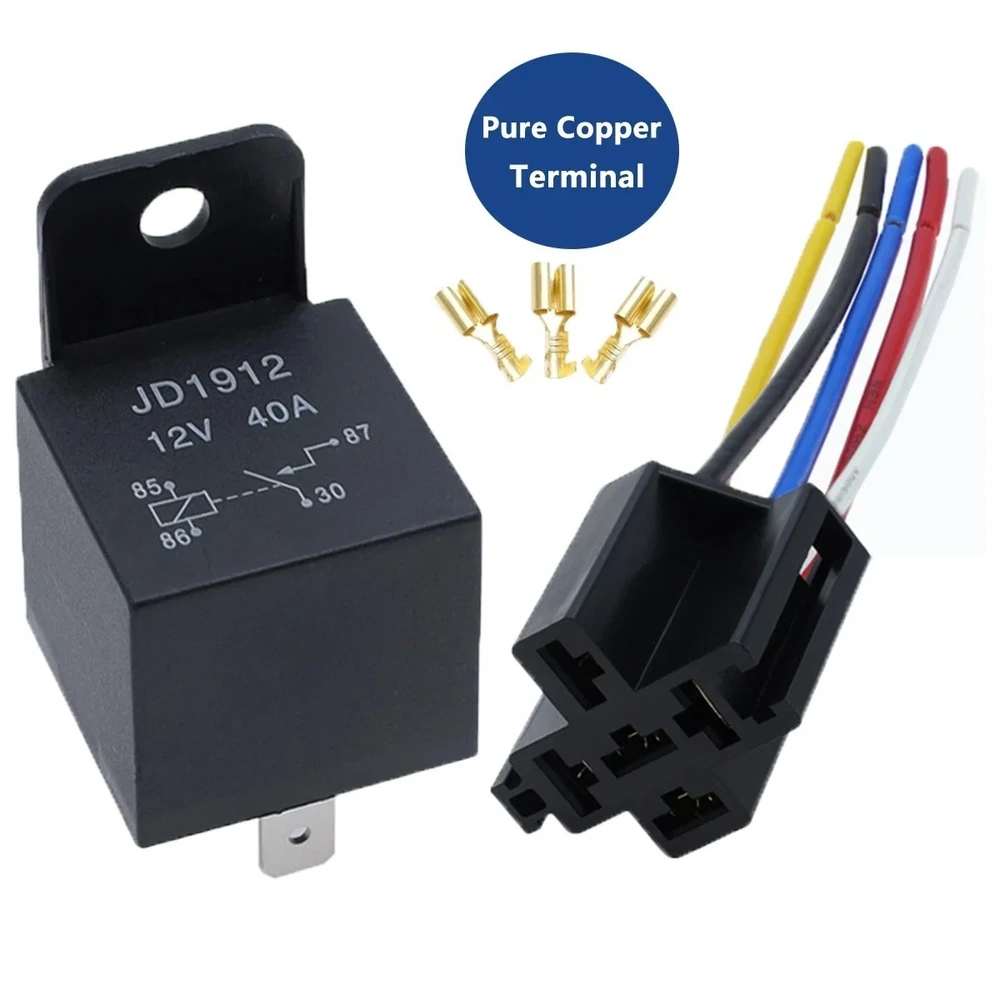
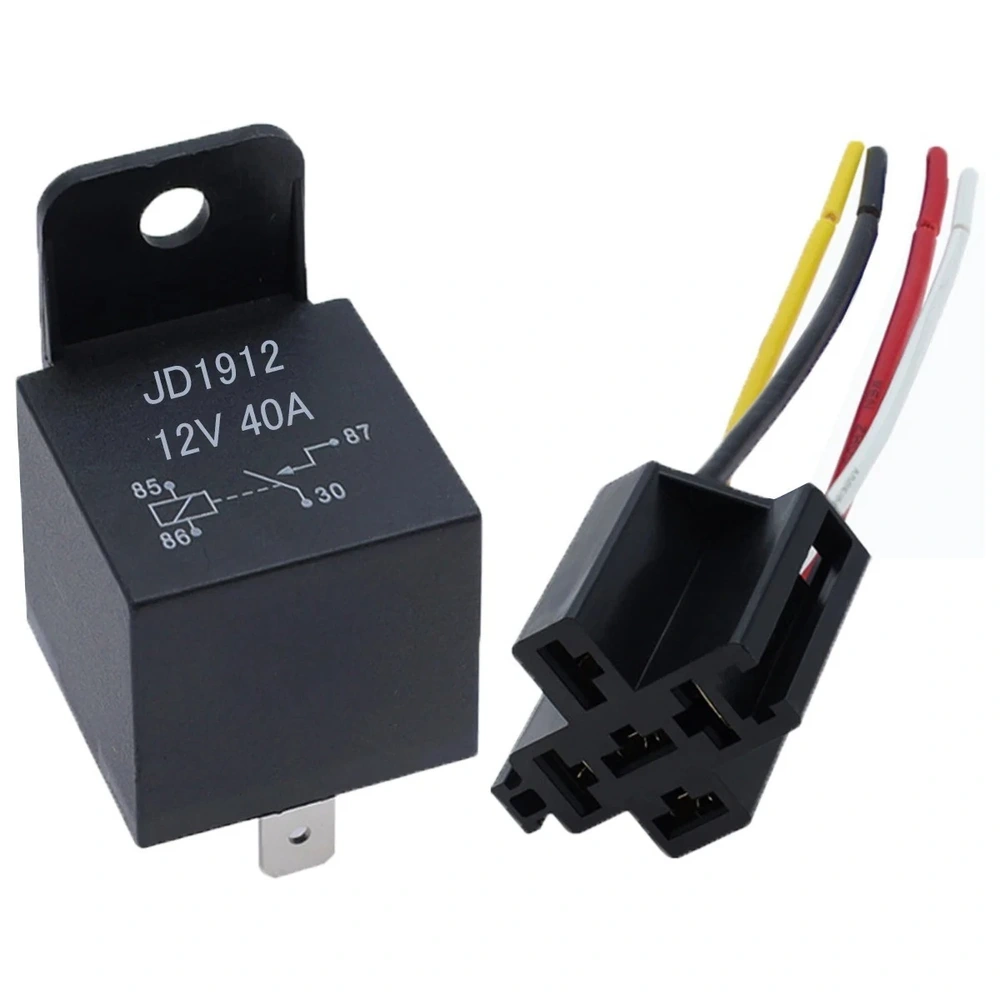
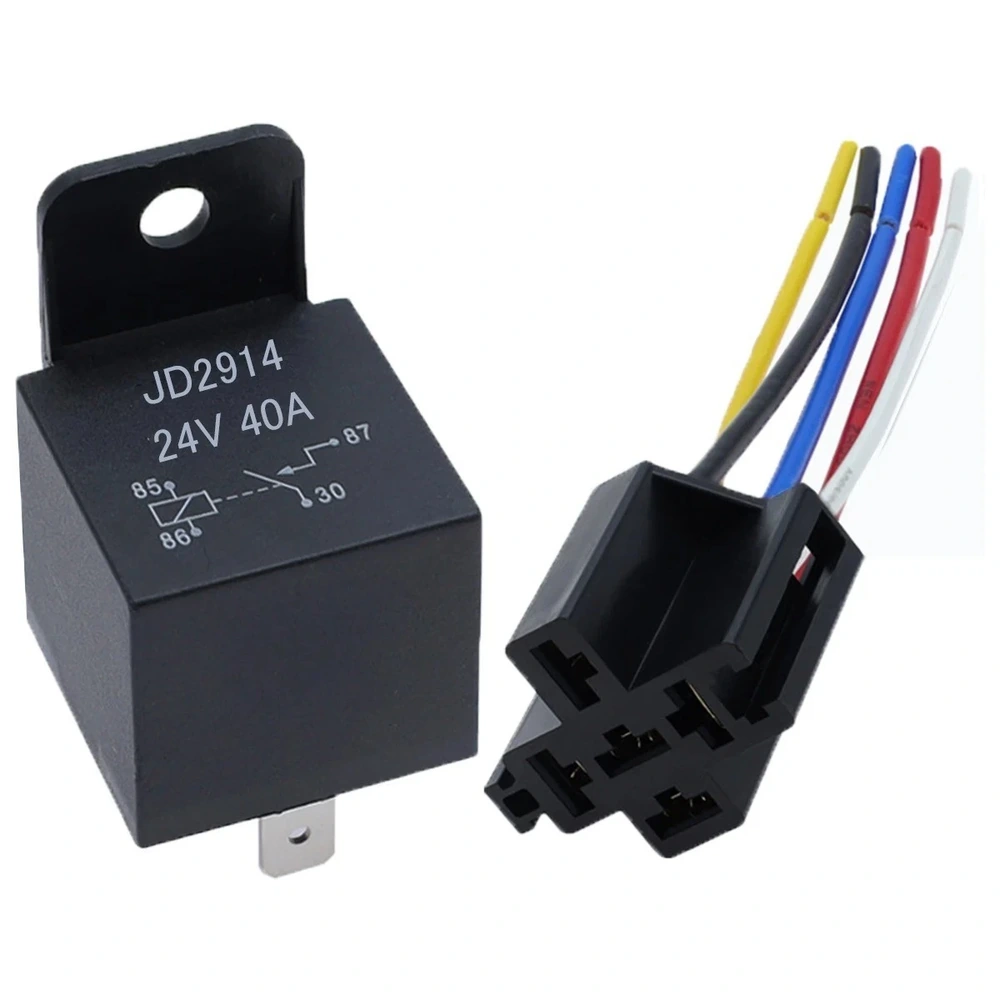
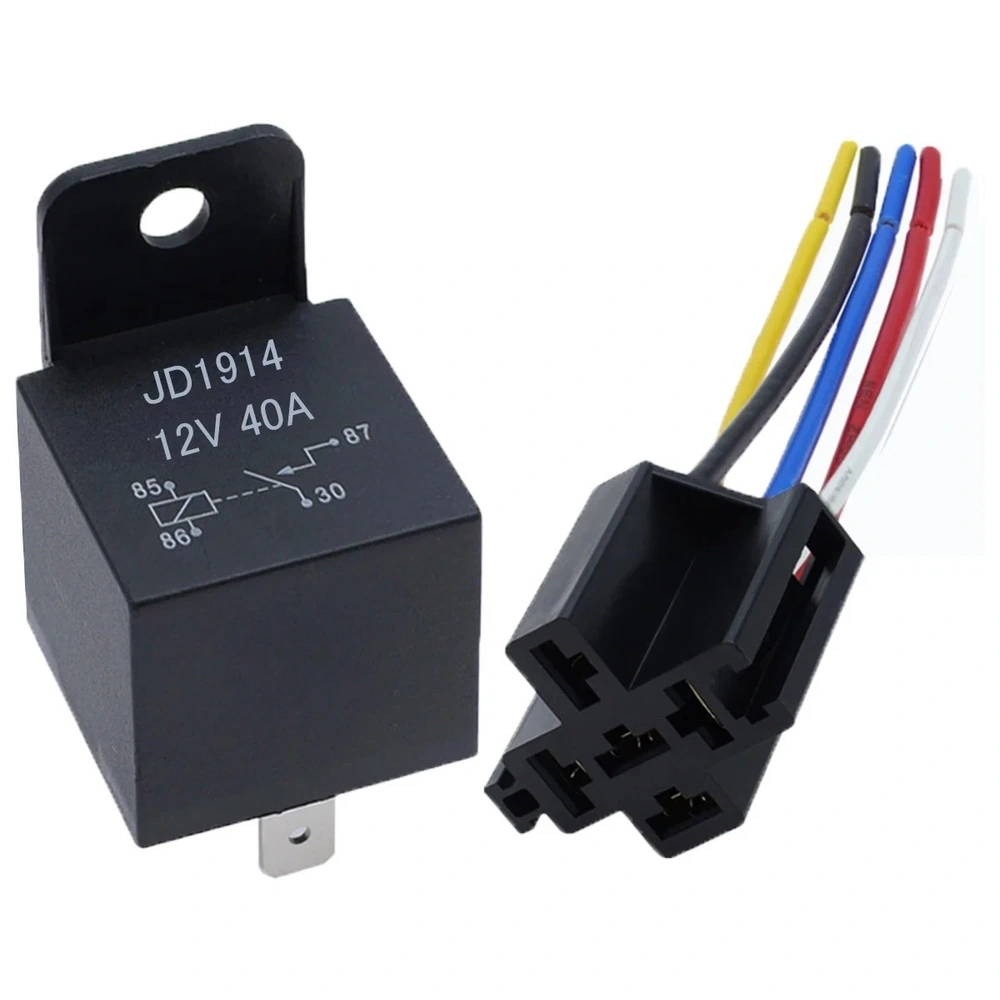
The matching product range is offered in 4-pin and 5-pin configurations with 12V or 24V coils and a nominal 40A working-current specification. Similar automotive relays use standard terminals including 30, 85, 86 and 87, with certain 5-pin versions adding either another 87 output or an 87a normally-closed terminal.
Key Features
- Automotive electrical relay
- Available in 4-pin and 5-pin configurations
- 12V DC and 24V DC options
- Up to 40A nominal contact rating on matching versions
- Normally-open switching available
- Suitable for compatible car electrical circuits
- Useful for auxiliary lighting
- Suitable for cooling fan circuits
- Can be used with compatible pumps
- Useful for vehicle accessory wiring
- Compact automotive relay format
- Standard blade terminals on common versions
- Waterproof or sealed construction on matching variants
- Suitable for automotive wiring harnesses
- Manual wiring installation required
Product Specifications
Product Type: Automotive Electrical Relay
Rated Voltage: 12V DC / 24V DC depending on selected version
Current Rating: Up to 40A on matching version
Pin Options: 4 Pin / 5 Pin
Typical Terminals: 30 / 85 / 86 / 87 / Optional 87 or 87a
Contact Type: Normally Open or Changeover depending on selected relay
Contact Material: Silver-alloy type on matching listing
Colour: Black
Connection: Male Blade Terminals
Mounting: Bracket / Relay Socket depending on model
Water Resistance: Waterproof/sealed on supplier-rated versions
Use: Automotive / Vehicle Electrical Switching
Quantity: 1 Relay unless otherwise selected
The matching UK listing specifies 12V or 24V DC, 40A working current and silver-alloy contacts.
Why Choose This 4/5 Pin 40A Automotive Relay?
Switch Higher-Current Accessories More Safely
An automotive relay allows a low-current control circuit to switch a higher-current accessory circuit.
This is commonly useful for:
- Auxiliary lamps
- Fog lights
- Headlights
- Electric cooling fans
- Pumps
- Air-conditioning control circuits
- Vehicle accessory wiring
The matching relay listing specifically references fog lamps, headlamps, battery control, oil-pump control, fan control and air-conditioning applications.
Available in 12V & 24V Versions
Choose the relay coil voltage to match your electrical system.
Common applications include:
12V
- Cars
- Motorcycles
- Vans
- Many 4x4s
24V
- Certain lorries
- Commercial vehicles
- Agricultural equipment
- Specialist vehicle systems
Never connect a 12V relay coil directly to a 24V electrical system.
4-Pin Relay Configuration
A typical 4-pin normally-open automotive relay uses:
- Pin 30 – Common / Power Input
- Pin 87 – Normally Open Output
- Pin 85 – Coil Terminal
- Pin 86 – Coil Terminal
When the coil is energised, the relay connects terminal 30 to 87.
A current UK 12V 40A four-pin relay uses exactly this terminal arrangement: 85, 86, 30 and 87.
5-Pin Relay Configuration
This requires extra care.
There are at least two common five-terminal layouts.
5-Pin Changeover Relay
Common terminals:
- 30
- 85
- 86
- 87
- 87a
In this configuration:
- 30 connects to 87a when the relay is not energised
- 30 switches to 87 when energised
5-Pin Double-87 Relay
Some five-pin normally-open relays use:
- 30
- 85
- 86
- 87
- 87
This design can switch two normally-open outputs at the same time.
A current UK automotive supplier sells a 12V 40A 5-pin relay specifically in this double-output normally-open configuration.
Always follow the circuit diagram printed on the actual relay.
Normally Open Operation
A normally-open relay leaves the main switched circuit disconnected while the coil is off.
Once the coil is energised:
Pin 30 connects to Pin 87
allowing current to flow to the accessory.
This configuration is commonly used when an accessory should only receive power after a switch, ignition feed or control signal activates the relay.
40A Rating
The matching product advertises a 40A working current, while other UK automotive relays also use 40A maximum ratings.
However, the practical current capacity of the full circuit also depends on:
- Wire gauge
- Relay socket
- Connectors
- Fuse rating
- Operating temperature
- Continuous versus intermittent load
- Contact configuration
Do not assume that every circuit should be operated continuously at the maximum stated rating.
Waterproof / Sealed Construction
The matching product is marketed as waterproof, and current dedicated automotive waterproof relay ranges are also available in 12V and 24V configurations.
Even with a sealed relay body, the complete installation is only as weather-resistant as:
- Relay socket
- Terminals
- Cable seals
- Connectors
- Mounting position
Avoid leaving exposed terminals where water can collect.
Suitable for Auxiliary Lights
Automotive relays are frequently used when fitting:
- Fog lamps
- Spotlights
- Work lights
- Auxiliary headlights
- LED lighting
The relay allows the control switch to operate the relay coil rather than carrying the full lamp current.
Suitable for Cooling Fans
Relays can also control compatible:
- Radiator fans
- Auxiliary cooling fans
- Ventilation fans
Check the fan’s startup and running current before selecting the relay and wiring.
Electric motors can draw significantly more current during startup.
Suitable for Pumps
Potential applications include compatible:
- Fuel pumps
- Water pumps
- Washer pumps
- Auxiliary pumps
Only use where the relay specification is suitable for the load and electrical system.
Standard Automotive Blade Terminals
Comparable automotive relays commonly use 6.3mm male blade terminals.
A current UK 4-pin 40A model specifies four 6.35mm terminals, while a five-pin 40A version uses five 6.3mm Lucar-style terminals.
Check your relay socket before purchase.
How to Wire a Typical 4-Pin Normally Open Relay
A common basic layout is:
Pin 30: Fused battery or supply input
Pin 87: Output to accessory
Pin 85: Coil connection
Pin 86: Coil connection
The exact polarity of 85 and 86 depends on whether the relay contains an internal diode or suppression component.
If a diode is fitted, polarity matters.
Always follow the wiring diagram printed on the relay.
Always Use a Fuse
The power supply to terminal 30 should normally be protected by an appropriately rated fuse located close to the power source.
Fuse selection should protect:
- The wiring
- The accessory
- The relay circuit
The fuse should be selected according to the actual circuit rather than simply matching the relay’s maximum current rating.
Choose the Correct Cable Size
High-current circuits require appropriately sized automotive cable.
Cable size depends on:
- Current draw
- Cable length
- Voltage drop
- Installation environment
- Temperature
Undersized wire can overheat.
12V vs 24V – Important
Select the correct relay before installation.
12V Relay
Use with a 12V coil control system.
24V Relay
Use with a 24V coil control system.
The coil voltage and contact current rating are different specifications.
A relay marked 40A does not mean it can accept either 12V or 24V unless the exact selected variant is rated accordingly.
Available Variations
This product does not have flavours.
The correct section is Available Variations.
Depending on your stock, options may include:
- 12V 4 Pin
- 12V 5 Pin
- 24V 4 Pin
- 24V 5 Pin
Only publish combinations physically available.
Contact Material
The matching listing specifies silver-alloy contacts and a copper coil.
Silver-alloy contact materials are commonly used in relays because they provide suitable electrical switching characteristics.
Do not claim a specific alloy grade unless confirmed by your supplier.
Relay Life
The matching product advertises:
- Electrical life: 100,000 operations
- Mechanical life: 10,000,000 operations
under the seller’s stated conditions.
Actual service life depends on load, switching frequency, temperature and installation quality.
Installation Guide
Step 1 – Disconnect the Battery
Disconnect the appropriate battery terminal before modifying vehicle wiring.
Step 2 – Confirm Relay Voltage
Make sure the relay coil matches the vehicle’s 12V or 24V system.
Step 3 – Check the Pin Diagram
Read the diagram printed on the relay.
Step 4 – Install a Fuse
Protect the power input using an appropriately rated fuse.
Step 5 – Connect the Circuit
Use properly crimped automotive terminals and suitable wire.
Step 6 – Secure the Relay
Mount the relay away from:
- Exhaust heat
- Moving components
- Standing water
- Sharp edges
Step 7 – Reconnect & Test
Reconnect the battery and test the circuit carefully.
What’s Included?
Each order typically contains:
- 1 x Automotive Relay
Relay socket, wiring, fuse, fuse holder and connectors are not included unless specifically stated.
Safety Information
- Disconnect the vehicle battery before wiring.
- Select the correct 12V or 24V coil version.
- Follow the pin diagram printed on the actual relay.
- Never assume all 5-pin relays use the same circuit.
- Protect high-current wiring with a correctly rated fuse.
- Use appropriately sized automotive cable.
- Do not exceed the relay’s rated contact current.
- Consider motor startup current when switching fans or pumps.
- Use proper crimped or approved electrical connections.
- Protect exposed terminals from moisture and corrosion.
- Keep wiring away from exhausts and other heat sources.
- Keep cables clear of moving belts, fans and steering components.
- Do not bypass factory vehicle safety systems.
- Incorrect automotive wiring can cause overheating, electrical fire or equipment damage.
- Seek a qualified auto electrician where the circuit requirements are uncertain.
Frequently Asked Questions
What is an automotive relay?
An automotive relay is an electrically operated switch that allows a small control current to switch a larger accessory circuit.
Is this relay 40A?
The matching version is specified at 40A working current.
Is it available in 12V?
Yes.
Is it available in 24V?
Matching listings also offer 24V options.
Can I use a 12V relay on a 24V vehicle?
No.
Use the correct coil voltage for the electrical system.
What does 4 pin mean?
A typical 4-pin normally-open relay uses:
- 30
- 85
- 86
- 87
What does 5 pin mean?
A fifth terminal may be:
- 87a for a changeover circuit
or - A second 87 for dual normally-open output
Check the relay diagram.
What is pin 30?
Pin 30 is normally the common power terminal.
What is pin 87?
Pin 87 is typically the normally-open switched output.
What are pins 85 and 86?
They are normally the relay coil terminals.
What is pin 87a?
On a changeover relay, 87a is the normally-closed contact.
Is every 5-pin relay a changeover relay?
No.
Some 5-pin relays use two terminal 87 outputs instead.
Is this normally open?
The product range includes normally-open versions.
Always check the printed diagram for the selected relay.
Is it waterproof?
The matching listing markets the relay as waterproof.
The wiring connectors still need suitable environmental protection.
Can I use it for fog lights?
Yes, where the circuit current and wiring are appropriate.
Can I use it for headlights?
Yes, on a correctly designed compatible circuit.
Can I use it for an electric fan?
Yes, provided the fan’s operating and startup current remain within the relay and wiring limits.
Can I use it for a fuel pump?
Potentially yes, where the electrical specifications and vehicle design allow it.
Can I use it for LED lights?
Yes, for compatible auxiliary LED-lighting circuits.
Does the 40A rating mean I need a 40A fuse?
No.
The fuse should be sized for the accessory and wiring, not automatically to the relay’s maximum rating.
Does polarity matter on terminals 85 and 86?
It may.
If the relay contains a diode, coil polarity must be followed.
Does it include a relay socket?
Only if your exact selected package states that a socket is included.
What terminal size does it use?
Comparable versions commonly use approximately 6.3mm automotive blade terminals.
Can I replace an existing relay with this one?
Only if the following match:
- Coil voltage
- Pin layout
- Contact arrangement
- Current rating
- Terminal size
- Physical fit
Can I use it in a caravan?
Potentially, for compatible 12V or 24V DC accessory circuits.
Is it suitable for marine use?
Some automotive-style relays are used in marine electrical applications, but a waterproof relay should not automatically be considered marine-certified.
Why does the relay click?
The click is the internal electromagnetic switch moving when the coil is energised.
Why is my relay getting hot?
Possible causes include:
- Excessive current
- Poor terminal connection
- Undersized wiring
- High contact resistance
- Incorrect relay specification
Stop using the circuit and inspect it if the relay becomes excessively hot.
Can I wire it myself?
If you understand automotive electrical circuits, correct fuse selection and cable sizing, installation may be straightforward.
Otherwise, use a qualified auto electrician.



Reviews
There are no reviews yet.